
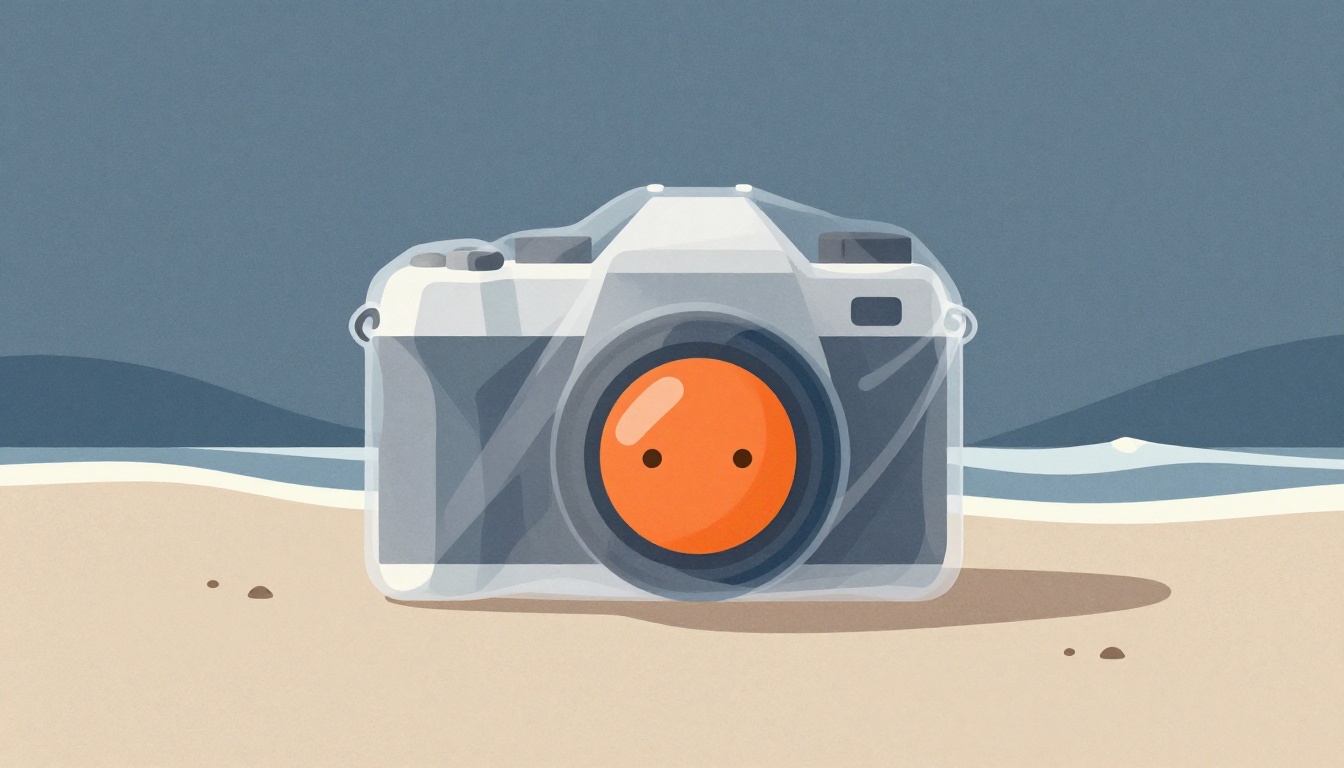
You've planned the perfect beach session, but the ocean breeze carries more than just salt—it carries the potential to corrode your camera body, scratch your front element, and jam your zoom ring. Salt spray will corrode your camera and lenses, and a splash of ocean water is the bad news trifecta because it carries sand and salt too (Scott Davenport Photography). The good news: with a few deliberate habits and inexpensive gear, you can shoot confidently by the surf without sacrificing your kit.
What does Nikon recommend for cleaning salt spray off your camera?
Select one answer.
Start with a rain cover before you hit the sand
The simplest and most effective layer of defense is a rain cover. Even a basic plastic bag with rubber bands can keep salt spray off your camera body and lens (Reddit AskPhotography). For a more professional solution, consider a dedicated rain sleeve like the LensCoat RainCoat, which is designed to keep out salt and sand while still allowing access to controls (Audubon). Think Tank's Hydrophobia series offers multiple sizes for DSLR and mirrorless bodies, and their Emergency Rain Covers are a budget-friendly option that folds flat in your bag (Think Tank Photo). If you're on a tight budget, a clear plastic bag with a drawstring—like those from Op/Tech—works well and lets you see your settings (Backcountry Gallery Forums).
Use a filter as a sacrificial shield
Your lens's front element is the most vulnerable part. A UV or clear filter acts as a sacrificial layer: sand in the air will scrub away at the protective coating on your lens, and salt isn't good for it either. Over time, filters will degrade, but replacing a filter is far cheaper than replacing good glass (Scott Davenport Photography). If you're already using a polarizer or neutral density filter, you're protected—just remember to wipe it down with a microfiber cloth after each session.
Minimize lens changes and shield during swaps
Every time you change a lens, you invite sand, salt, or water into the camera body and onto the lens contacts. Dust on sensors can be cleaned, but corrosion on contacts is a much bigger problem (Scott Davenport Photography). Plan your shots to use one lens for as long as possible. When you must swap, do it quickly and shield the camera with your body or a rain cover. Avoid changing lenses in windy conditions, and never set the camera down directly on the sand.
Clean your gear properly after every beach session
Salt doesn't stop working when you leave the beach. For normal salt spray, Nikon recommends removing sand or salt with a cloth lightly dampened with distilled water, and then drying the camera thoroughly. Never rinse or pour water over the camera unless the manufacturer specifically permits it (Flats Nation). For the front element, start with a blower or brush to remove loose particles—sand particles on the lens will scratch the surface when pressure is applied, even with a soft cloth. Then use a clean cloth with pure ethanol or isopropanol, pulling the cloth over the glass without applying pressure (Backcountry Gallery Forums).
Store gear in a sealed bag with silica gel
After cleaning, store your camera and lenses in a sealed plastic bag with silica gel packets. This absorbs residual moisture and prevents corrosion from developing over time. A high-quality, water-repellent camera sling bag is also worth the investment for beach shoots—it keeps gear protected while you travel and allows quick access without exposing the camera to the elements (Flats Nation).
Quick beach protection checklist
- Before you go: Check weather-sealing on your camera and lenses; if not sealed, use a rain cover.
- On the beach: Keep a rain cover or plastic bag within reach; use a UV filter on every lens.
- During the shoot: Minimize lens changes; shield the camera during any swap.
- After the shoot: Blow off sand, wipe with a damp distilled-water cloth, dry thoroughly, and store with silica gel.
By following these steps, you'll keep your gear functioning for years of coastal shoots. The beach is a harsh environment, but with the right habits, your camera will survive—and your images will thrive.
How the Featured Expert Can Help
Coastal Heirloom Studio, a boutique photography business in Panama City Beach, Florida, specializes in luxury beach portraits for families, couples, and events. Their experienced team, led by Michael Evans and Kristy Evans, handles the challenges of beach light and salt spray daily, delivering heirloom-quality images. If you're planning a beach session and want professional results without worrying about your gear, visit Coastal Heirloom Studio to learn more about their personalized sessions and professional editing.