
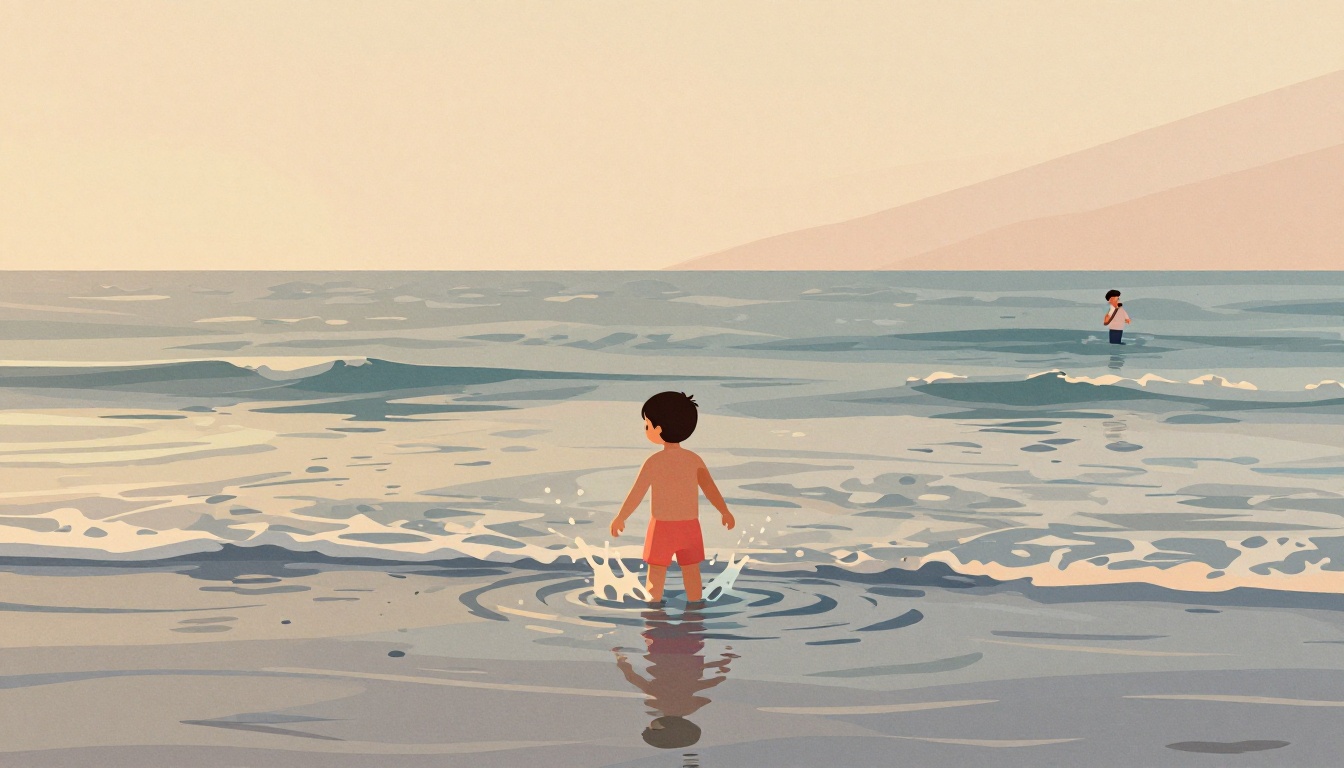
According to beach photography guides, what shutter speed is recommended to freeze splashing water?
Select one answer.
Why shallow-water photos usually fail
Kids in shallow water are one of the hardest moving targets in beach photography. They splash, turn away, and move in and out of glare, and the bright sand and water bounce light from every direction. The result is often blown-out highlights, harsh shadows, or stiff poses because the child was told to smile at the camera.
The fix is not more gear. It is better timing, a few deliberate settings, and letting the child play while you work as an observer. Here is how to do it.
Start with light and timing
The single biggest improvement comes from when you shoot. Golden hour — the hour after sunrise and the hour before sunset — gives warm, soft, directional light and removes the harsh glare that flattens midday scenes (iPhotography).
If you must shoot at midday, look for shade or use the strong light deliberately for high-contrast, graphic shots. Backlighting also works well: place the sun behind the child and expose for their face, letting the background go bright (Annabel Williams).
Camera settings that freeze splashes
Shallow water is all about motion, so shutter speed matters more than anything else. Use a fast shutter speed to freeze splashing water and prevent unwanted blur (Click Love Grow).
A reliable starting point for bright coastal light:
- ISO: 100 or 200 for clean files in plenty of light.
- Aperture: f/8 to f/11 to keep the scene sharp, or wider (f/2.8–f/4) if you want a blurred background.
- Shutter speed: 1/500s or faster to freeze droplets and splashes.
- Exposure compensation: add a little positive compensation so bright sand and sea stay bright rather than grey.
Shoot in RAW so you can recover highlights from water glare later. A circular polarizing filter also helps cut glare on the water surface (Adorama).
Let them play — don't direct them
The most natural photos come from candid moments. If you tell kids what to do, you ruin the moment; let them play and they will give you countless moments to photograph (Digital Photography School).
Practical approach:
- Set up your exposure before the child enters the water.
- Stand back and let them get absorbed in play.
- Shoot in bursts to catch the peak of a splash.
- Call their name occasionally so they look up naturally.
Get low and change your angle
Your photos will look more exciting if you get down to their level — or lower. Shooting from a low angle puts the viewer inside the child's world and makes splashes and reflections more prominent (Digital Photography School).
Also vary your position: shoot from the side to catch backlight through droplets, and from the front to catch expressions. Wet sand creates beautiful reflections, so look down as well as across (Instagram).
Protect your gear and your files
Salt, sand, and spray are real hazards. Keep a microfiber cloth handy, avoid changing lenses on the beach, and let your camera adjust to the humidity before shooting to prevent fog and haze. A rain cover or even a clear plastic bag protects against splashes without blocking your controls.
Quick checklist before you shoot
- Check the tide and pick a shallow, calm spot.
- Confirm golden hour timing for your location.
- Set ISO 100–200, f/8–f/11, shutter 1/500s or faster.
- Add slight positive exposure compensation.
- Shoot RAW and enable burst mode.
- Get low, stay back, and let the kids play.
How the Featured Expert Can Help
Coastal Heirloom Studio is a boutique photography business based in Panama City Beach, Florida, specializing in luxury beach portraits for families, couples, and events. They offer personalized sessions and professional editing, with a small, experienced team led by Michael Evans and Kristy Evans. If you want your shallow-water family moments captured by professionals who know the local light and tides, you can learn more at Coastal Heirloom Studio.