
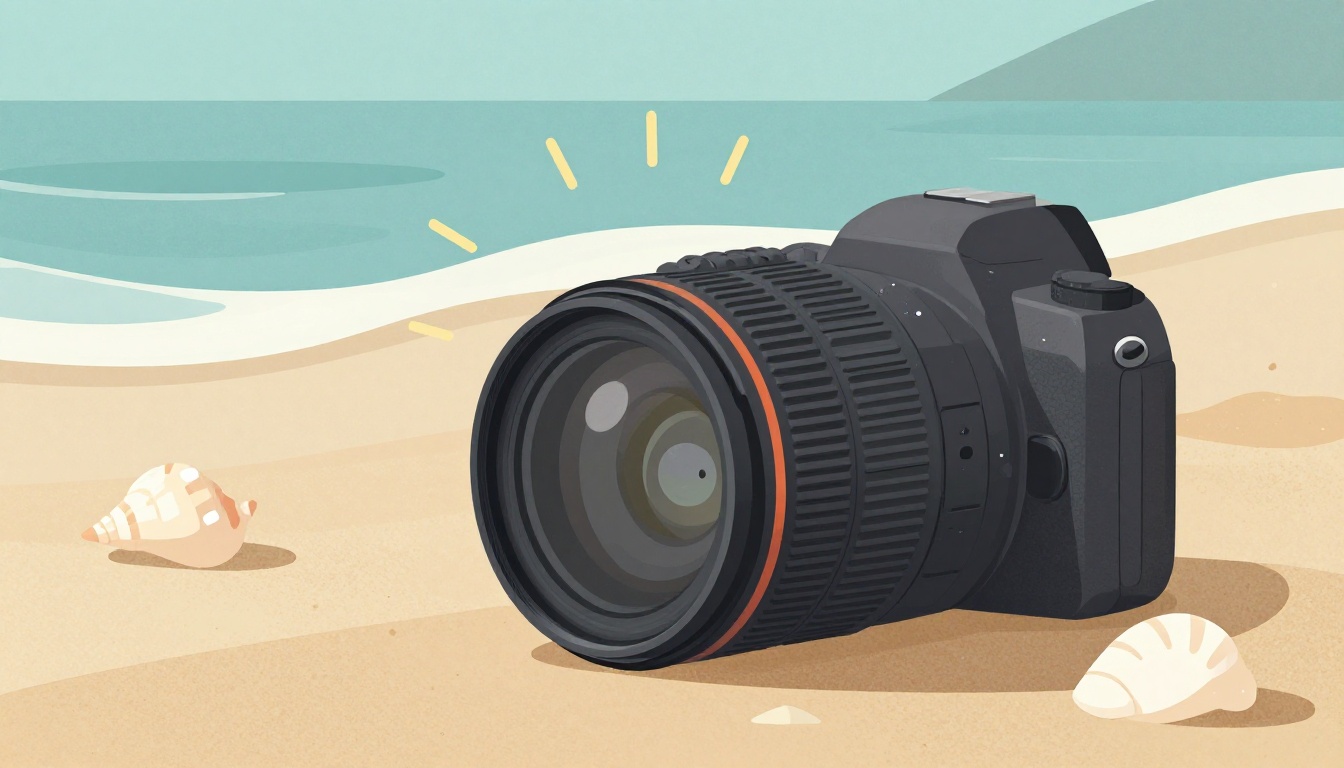
Which focal length is recommended for compressing the background and making the sun appear larger in beach portraits?
Select one answer.
Why your lens choice matters for beach portraits
Beach portraits come with unique challenges: harsh midday sun, blowing sand, salt spray, and constantly changing light. The right lens helps you manage these conditions while delivering sharp, beautiful images. The wrong lens can leave you fighting focus issues, flare, or worse — damaged gear.
Prime lenses for creamy backgrounds and sharp detail
Prime lenses with wide apertures (like f/1.4 or f/1.8) are popular for beach portraits because they let in more light and create that sought-after blurred background (bokeh). Common choices include 35mm, 50mm, and 85mm focal lengths. A 35mm f/1.4 is excellent for capturing environmental portraits that include the beach setting, while an 85mm f/1.4 compresses the background and makes the sun or moon appear larger in frame. The 50mm f/1.8 is a budget-friendly option that works well for both full-body and half-body shots.
According to photographer Marcie Reif, the Sigma 35mm f/1.4 Art lens is "perfect for anytime of the day" and handles variable light conditions well, especially during golden hour source. She also recommends the Canon 135mm f/2L for controlled portrait and lifestyle images at the beach.
Zoom lenses for flexibility
Zoom lenses offer versatility when you need to quickly adjust framing without changing lenses — a major advantage in sandy, windy conditions. A 24-70mm f/2.8 covers wide group shots to tighter portraits. A 24-105mm f/4 extends your reach for candid moments. The travel photographer Bruce Lovelace suggests a wide-angle to telephoto zoom like 24-105mm or 100-400mm for beach work source.
Weather sealing and protection
Sand and salt spray are the biggest threats to your gear. Weather-sealed lenses and cameras offer better protection, but even non-sealed gear can be used safely with precautions. The B&H Explora guide advises using sealed lenses and avoiding lens changes in dusty or wet environments source. A UV filter protects the front element from salt spray, and a plastic bag can shield the camera during lens changes source.
Practical checklist for beach portrait lenses
- Choose a fast prime (35mm, 50mm, or 85mm) for creamy bokeh and low-light performance.
- Consider a 24-70mm or 24-105mm zoom for flexibility and fewer lens changes.
- Use a UV or polarizing filter to protect the front element and reduce glare.
- Avoid changing lenses in windy or sandy conditions — use a zoom or a second body instead.
- Clean your lens with a Lenspen and microfiber cloth after each session.
- Store gear in a sealed bag when not in use.
Quiz: Test your knowledge
Which focal length is recommended for compressing the background and making the sun appear larger in beach portraits?
- 35mm
- 85mm
- 24mm
How the Resident Expert Can Help
Coastal Heirloom Studio, based in Panama City Beach, Florida, specializes in luxury beach portraits for families, couples, and events. Their experienced team understands the unique challenges of coastal photography and can help you plan a session that captures stunning, heirloom-quality images. Visit Coastal Heirloom Studio to learn more.